The recital your school has been working towards all year.
Most ticketing platforms haven't thought about a recital at all. They treat your Saturday matinee, Saturday evening, and Sunday matinee as three separate events with no shared roster, no shared seating template, no shared family allocations. Seaty was built around the way UK dance schools actually run the recital: one production, multiple performance dates, one roster of dancers, one plan template, family allocations at member rate, programmes and photo packages on the same order, and the choreography videos going out to the juniors on a Sunday night for the week's home practice.
Ticketing software for dance school recitals.
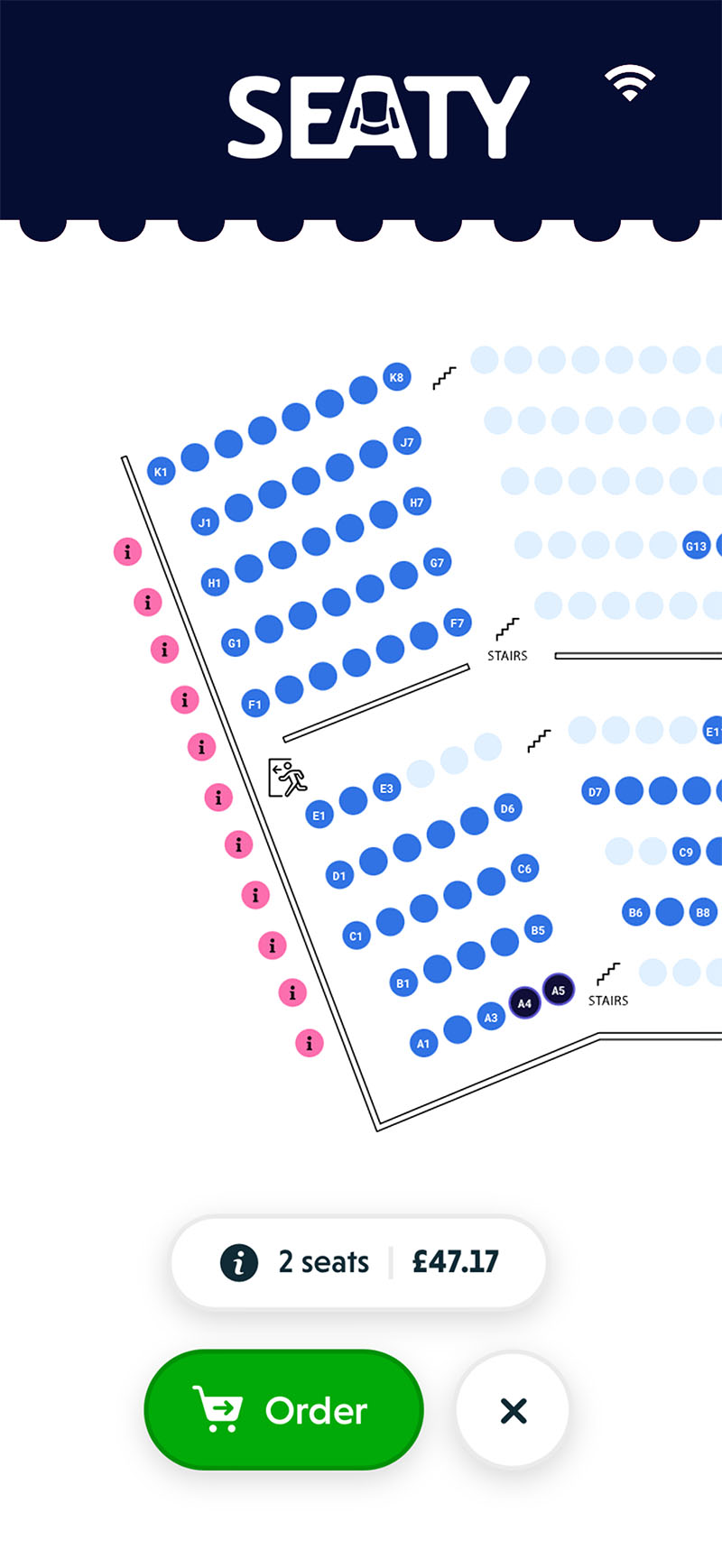
Reserved seating for dance recitals in hired theatres.
Most dance schools hire a regional theatre once a year for the annual recital, typically a 200 to 500-seat house with stalls, circle, and sometimes a balcony. Build the venue as a visual plan once, mark accessible seats and the hearing-aid loop row, and let parents pick their own seats for each performance their dancer is in. The same plan template carries across the Saturday matinee, Saturday evening, and Sunday matinee. Parents booking different shows for different relatives doesn't break anything, and the school does not have to rebuild the theatre three times. The visual editor is covered in detail in our guide on setting up a seating plan.
- Visual editor for any hired theatre layout from a 200-seat studio to a 500-seat civic theatre
- Sections for stalls, circle, balcony, and side seating
- Accessible seats, hearing-aid loop seats, and companion seating marked clearly
- Separate dates for matinee and evening shows sharing one plan template
- Parents see live availability and pick the row, side, and aisle they actually want
- Works on phones for parents and on a tablet at the front-of-house desk
The grandma seat, the hearing-aid loop, and three shows on one weekend.
Grandma on her father's side is at the matinee, on the aisle near the toilets, on the hearing-aid loop seat. The aunts and uncles from her mother's side are coming to the evening show, a block of six together in the circle. The cousins are coming Sunday, three in the stalls and two on the balcony. Stripe Checkout doesn't know that grandma needs the aisle seat, that grandad needs the hearing-aid loop, or that this family has already used four of their six member-rate tickets. With reserved seating across three separate performance dates, families pick the seats that work for whoever is sitting in them, and grandma sits where she needs to sit, every time.
Building this year's recital around grandma's seat?
Family ticket allocations for dance schools.
Member-rate tickets for each family, extras at full price

Most UK dance schools give each family a quota of tickets at member rate (usually four to six) with additional tickets at full price for the extra grandparents and godparents. Seaty tracks those quotas as families book, applies the right price step automatically when a family crosses from member rate to full price, and shows the principal running totals for what has been booked, what has been paid, and what is still outstanding across the whole recital. No more end-of-recital arguments about who got the better seats, and no more spreadsheet of who owes what for the seventh ticket.
- Set quotas per family, per dancer, or per class
- Member rate for the first four to six tickets, full price thereafter
- Differential pricing for adults, children, and concessions
- Families see their own allocation and what they have booked across all performances
- Outstanding balances visible across the whole recital
- Statements you can email to anyone who still owes before opening night
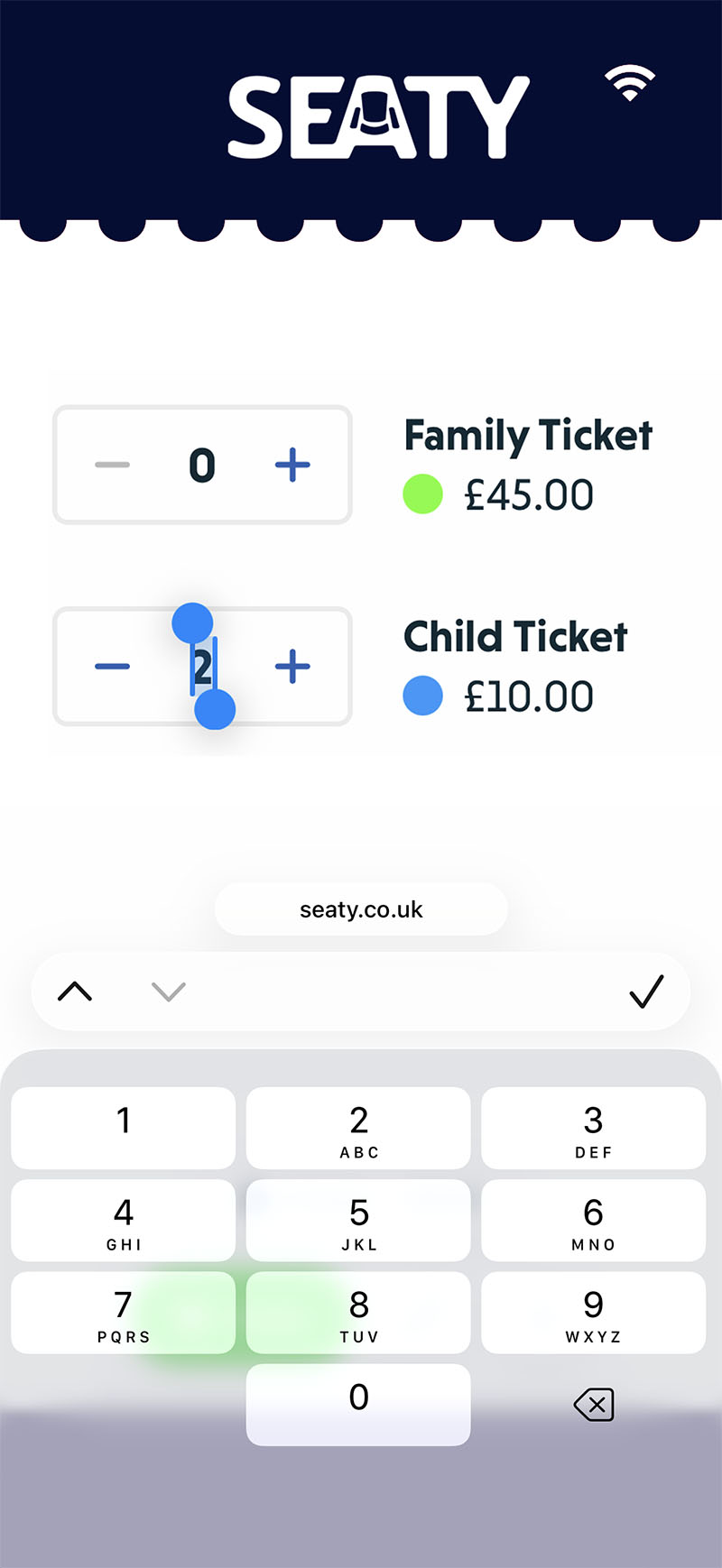
Selling recital programmes online alongside tickets.
The recital programme, with every dancer's name, photograph, and biography, often the most-loved keepsake of a child's young dance career, typically prices at five to ten pounds and sells alongside tickets in the same checkout. Recital flowers handed out after the show, photo packages from the in-house photographer, USB sticks of the whole performance, branded leotards, and hair pieces all sit on the same order. Families pay for everything in one go, not three times, and the front-of-house desk hands out scannable vouchers on the night.
- Programmes priced and sold the same way as tickets
- Recital flowers and bouquets pre-ordered before the show
- Photo packages from digital downloads to printed prints to USB sticks
- Branded leotards, hair pieces, and ballet shoes on the same order
- Scannable vouchers for the front-of-house desk
- Stock counts so the desk knows what has gone before the interval queue
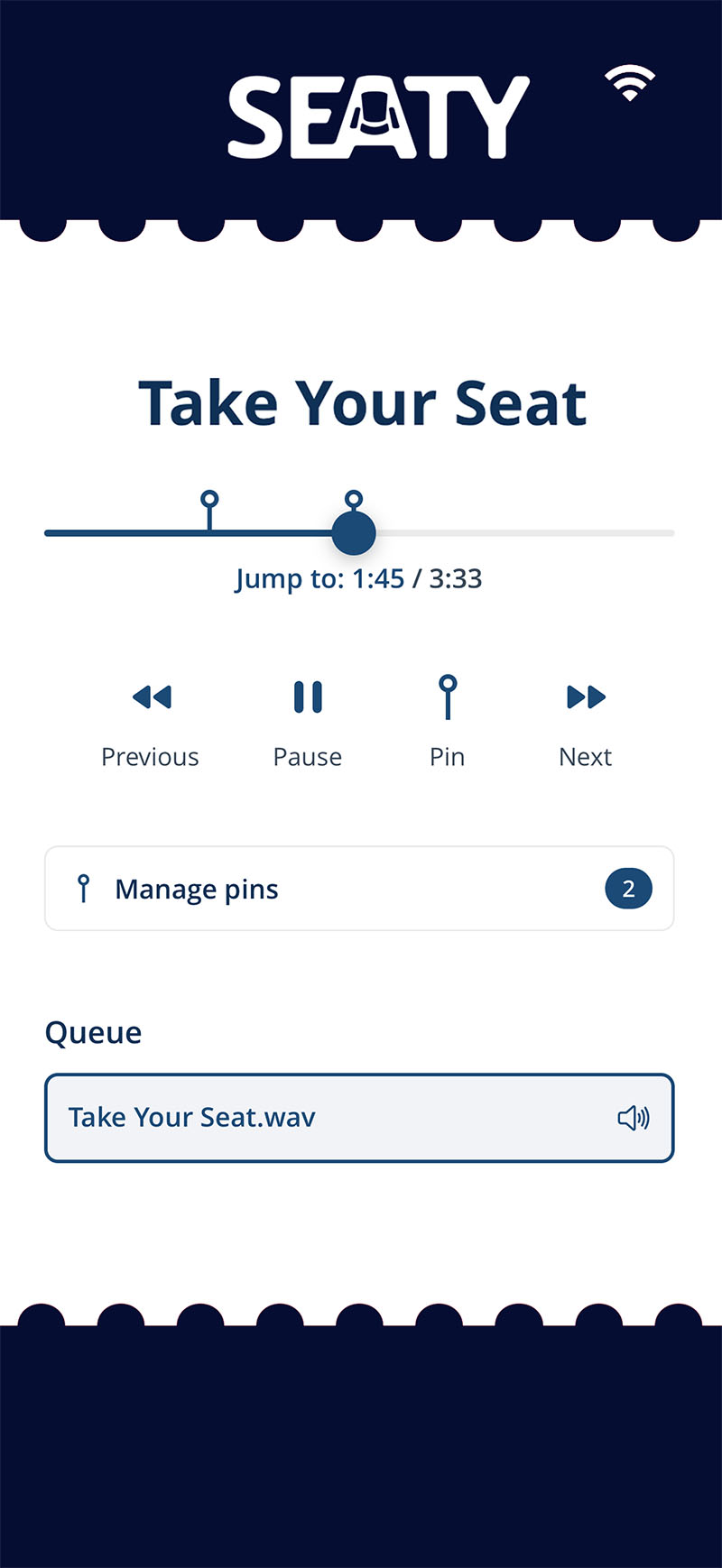
Choreography videos and rehearsal music sharing.
Link Dropbox to the school and share choreography videos, rehearsal music, sheet music, and counts with students through the Seaty app. Videos play in the app for home practice, audio tracks support pinned moments so a dancer can loop the lift, the pas de chat, the time step, or the eight count they keep missing, and files stay available offline for practice without wifi. Students actually practise at home, instead of asking the principal at the next class. Sharing scopes by class or by piece, so the juniors do not get the seniors' contemporary track and the cast of the showpiece do not get the chorus blocking.
- Choreography videos shared by class or by piece
- Rehearsal music with pinned moments for tricky entries and lifts
- Offline access for practice on the way home from class
- Sheet music and counts alongside the audio track
- Background playback continues with the phone locked
- Access scoped to a class, a piece, or the whole school
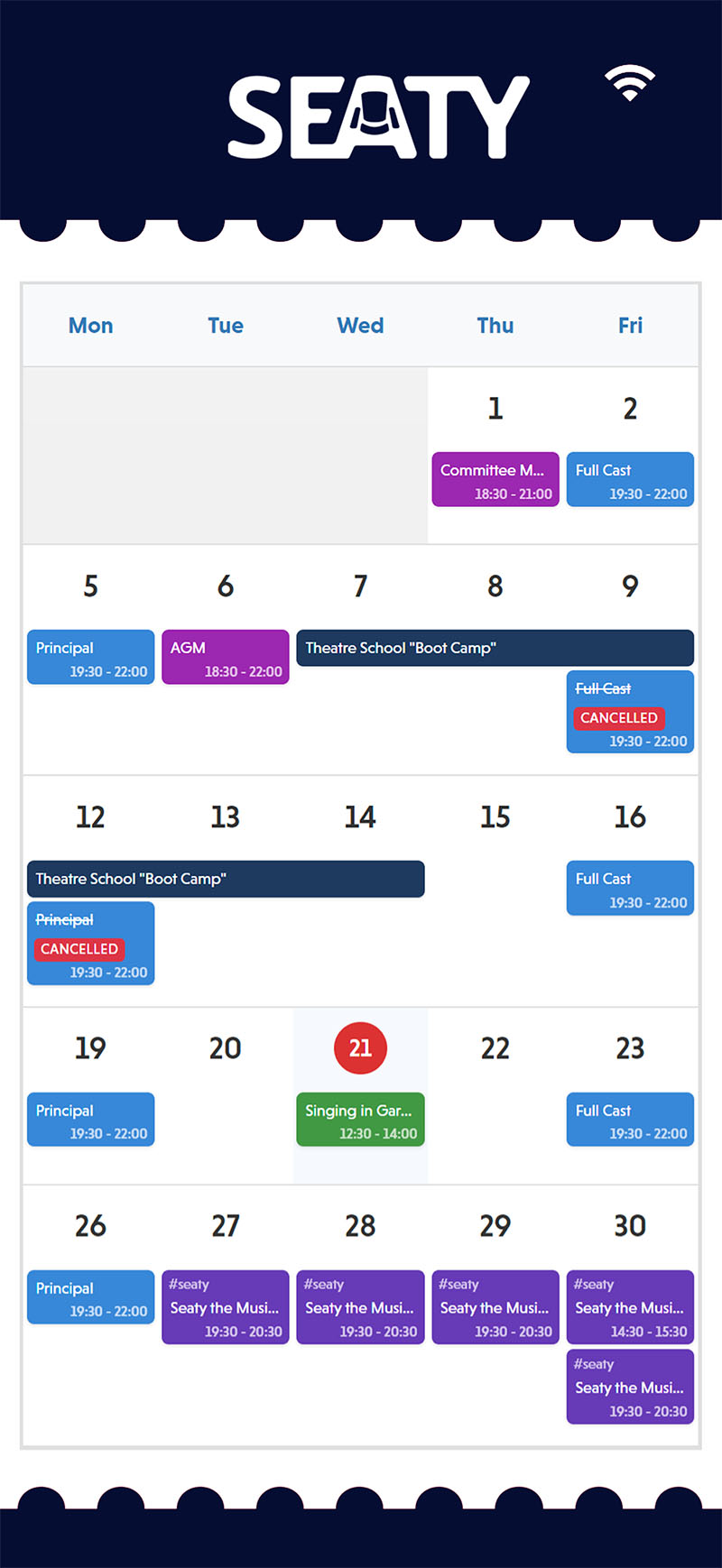
Multiple recital performance dates and the rehearsal schedule.
Recital prep is intensive, with extra Saturday rehearsals through the spring, costume fittings, dress runs, the tech rehearsal at the hired theatre on the Friday before, then the matinee and evening shows on the Saturday and the matinee on the Sunday. Schedule the lot in one calendar. QR check-in tracks attendance, which matters most when costume changes drive the running order. Becky has ninety seconds between numbers four and five and the music cannot start without her. The principal sees attendance history per dancer for the production team.
- Recurring weekly classes with one-off recital rehearsals layered on top
- QR check-in on arrival at the studio or the hired theatre
- Attendance history per dancer for the principal and choreographers
- Calendar views by recital, term, week, or single day
- Costume change windows visible in the running order
Same students, three performances, one production.
The questions you actually need to ask the family.
Dancer names, photo permissions, and the cast party

Add custom questions at the point of sale so the school collects what it needs without chasing parents on email. Which dancer is the family attending for, so the front-of-house team can match faces to seats. Photo and video permissions for the school's marketing reel and next year's prospectus. Dietary requirements for the cast party in the church hall after Sunday's matinee. The information lives with the order and exports straight to a spreadsheet.
Which dancer the family is attending for
Capture the dancer at the point of booking so the front-of-house team can match faces to seats
Photo and video permissions
Record GDPR-compliant consent for the school's marketing reel and prospectus, kept against the booking
Cast party dietary requirements
Collect dietary needs for the after-show party so the buffet works for the whole school
What a dance school recital actually needs.
Most ticketing platforms haven't thought about a recital at all. If you're running a Saturday matinee, Saturday evening, and Sunday matinee with the same students, they treat each as a standalone event. Three separate seating plans to maintain. Three separate family allocations to track. Three separate orders for a family attending all three shows, three card-not-present fees, three confirmation emails to the same grandparent. And most charge per-ticket fees on every order. For a recital where the average family books five tickets, that's £5 in fees before the studio has earned a penny on the programme.
Seaty was built around the way a UK dance school actually runs its recital:
The grandma seat, the hearing-aid loop, and the toilets. Reserved seating on a visual plan of the hired theatre, with accessible seats marked clearly, so families pick the seats that work for whoever is sitting in them, not whoever clicks first. Grandma sits where she needs to sit, every time. See our guide on reserved versus general admission for the decision context.
The same students across three performances on one weekend. Saturday matinee, Saturday evening, Sunday matinee, one shared roster, one plan template, one production. A family books different seats for different performances based on which side of the family is attending which, and nothing breaks.
Family allocations at member rate. Each family gets four to six tickets at member rate, with additional tickets at full price. The platform handles the price step when the family books their seventh ticket for the extra godparent. No more end-of-recital arguments about who got the better seats.
The programme as the headline keepsake. The recital programme is the most-loved keepsake of a child's young dance career. Photo packages, recital flowers, USB sticks of the show, and branded merchandise sit alongside it on the same order. Families pay for everything in one go, not three times.
Choreography videos shared with the dancers, not the audience. Class-scoped video and audio sharing through the app, with pinned moments for tricky sections and offline access for the train home from the studio. Students actually practise at home, instead of asking the principal at the next class. Stripe Checkout cannot do this. Most ticketing platforms have no concept of it.
Free if the school is taking payments itself. Most dance schools still take a meaningful share of payment by bank transfer or in cash at the studio. Seaty is free in that case, with the seating plans, family allocations, scanning, file sharing, and reporting all available. Per-ticket fees on every sale are the wrong shape for a school that already runs on tight margins. See how UK ticketing fees actually work for the breakdown.
Free if the school is taking payments itself.
For schools that would also like to take card payments online, there is a simple per-transaction fee with no contract and no monthly minimum. The school chooses whether to absorb it or pass it on at checkout.
For background on the different fee models you will see across UK ticketing platforms, including the per-ticket fees that quietly add up across a recital with hundreds of bookings, see our guide on how UK ticketing fees actually work, or the fees documentation for the specifics.