Reserved seating, or general admission?
Neither is universally better. The right answer depends on your venue, your audience, the kind of event, and how you want the door to feel. This guide walks through both honestly, covers the hybrid options most UK organisers end up using, and flags the operational and accessibility points that catch people out.
Last updated 28 April 2026.
To the best of our knowledge at the time of writing. Reviewed against the Equality Act 2010 (legislation.gov.uk) and current UK industry practice.
The simple version.
The decision, in three buckets.
Reserved, GA, or hybrid: pick from the audience first

The clearest way to choose is to start from the audience and work backwards to the venue. Reserved suits anyone who needs certainty before they arrive: families, multi-generational groups, anyone with accessibility needs, anyone paying a premium for position. GA suits a single-demographic crowd that will queue, stand, or move around freely. Hybrid is the right answer surprisingly often: a tiered audience or a tiered space turns into a tiered ticket type.
Use reserved when
You have a seated venue with numbered seats. Family groups and multi-generational audiences are buying together. Accessibility is critical and a wheelchair space plus companion needs to be guaranteed. You want premium pricing tiers, with the front row priced higher than back of balcony.
Use GA when
You have standing room or genuinely flexible seating. The audience is single-demographic and casual: a drinking gig, a club night, a festival. Demand is unlikely to overwhelm capacity, and the door can be managed with queue and counter rather than a seating plan.
Use hybrid when
The audience is tiered: cabaret tables at the front, GA pit behind. The format mixes: sit-down dinner first, dance floor after. The space is split: premium box reserved, stalls GA. A tiered ticket type is usually the honest answer.
When reserved seating works best.
Audience expectation, fixed venues, family bookings
Reserved seating is the default expectation in proper theatres and concert halls with fixed, numbered seats. It is the right choice when audiences want to know exactly what they have bought, when family groups need to sit together, when older audiences are not going to queue at the door, and when the seat itself is part of the value (front row versus back row, stalls versus balcony). It also makes accessibility much easier: a wheelchair space and the companion seat next to it can be guaranteed months ahead. For amateur dramatic societies in traditional venues, reserved is almost always right.
- Proper theatres and concert halls with numbered, fixed seating
- Classical concerts, opera, ballet, where audiences expect a named seat
- Family bookings where multiple generations need to sit together
- Older audiences who do not want to queue at the doors
- Accessibility: guaranteed wheelchair spaces and companion seats
- Premium events where the seat is part of what the buyer is paying for
- Dance recitals and dance school showcases where families travel and book in groups
When general admission works best.
Standing events, festivals, casual venues

General admission is the right answer when the venue does not have fixed numbered seats, when the audience will be standing or moving, or when flexibility on the night matters more than precise seat assignment. School halls with rows of stackable chairs are a classic GA case; the chairs may end up anywhere by the time the event starts. Casual community events, festivals, and gigs where part of the appeal is being on your feet near the front all suit GA. So do small studio spaces and pub theatre, where the layout is genuinely fluid.
- Standing events: gigs, club nights, mosh-pit-friendly shows
- Festivals and outdoor events with no fixed seating
- School halls and church halls with stackable chairs
- Casual community events where flexibility beats precision
- Studio spaces and pub theatre where the layout shifts per event
- Events where queuing early is genuinely part of the appeal
Worked examples: what each scenario actually calls for.
Concrete venues, audiences, and the decision they push you towards

The cleanest way to test whether reserved, GA or hybrid is right is to think through a few real scenarios. Each of these is a common UK setup, and the answer comes from the audience and venue rather than a generic preference.
200-seat school hall, parents at the nativity
Reserved. Parents are booking for specific children, families want to sit together, and grandparents want to know their seats are held. Number the chairs and run reserved.
80-seat pub theatre, late-night drinking comedy
GA. Single-demographic audience, casual entry, layout often shifts per show. First-come on the door is what the audience expects.
500-cap standing gig with VIP balcony
Hybrid. GA in the pit for the standing audience, reserved seating in the balcony for those who want a guaranteed spot. Two tickets, one event, clear difference at the point of sale.
300-seat dance recital with grandparents
Reserved. Multi-generational audience travelling in. Accessible spaces need to be designated explicitly. Family groups will be furious if they cannot sit together.
Village hall ceilidh with stackable chairs
GA. Layout will be reshuffled before the event, the chairs are not numbered, and the audience expects a casual door. Cap capacity hard and run GA.
Cabaret evening, mixed dinner and show
Hybrid. Reserved tables for the diners, GA for those just coming to watch the show. Sells the table as a premium product without forcing every buyer through the same flow.
Hybrid approaches you will actually see in UK venues.
Reserved and GA in the same room
Most UK organisers do not pick one and stop there. Hybrid setups are common, and often the right answer when there is a mixed audience or a mixed space. The trick is making sure buyers understand exactly what each ticket type entitles them to before they pay, never after.
Standing + reserved balcony
Common at rock and folk venues. GA standing on the floor, reserved seating in the balcony for those who want it.
Reserved stalls + GA balcony
Used when stalls sales need to be protected (better sightlines, easier accessibility) but the balcony fills more flexibly.
Cabaret tables + GA
Reserved tables of four or six at the front, GA seating or standing behind. Works well for comedy and small music.
Early bird priority entry
GA throughout, but a higher-priced "early entry" ticket gets in 30 minutes before doors. Cheap to run, popular with regulars.
Pricing: what each model lets you do.
Reserved usually commands a premium

Reserved seating typically commands a higher price than equivalent general admission, because buyers are paying for certainty. It also lets you vary price within the venue (front-row stalls higher than back-row balcony, premium centre block higher than side seats) and let buyers self-select. General admission is normally priced more flatly because every ticket grants the same right of entry; the only real lever is timing (early bird concessions) or section (a more expensive priority entry tier).
- Reserved: vary price by row, section, or seat, so buyers self-select on value
- Reserved: easier to justify a price premium because the seat is guaranteed
- GA: typically flat-priced, with concessions driven by booking time, not position
- Hybrid: a reserved tier alongside GA captures both kinds of buyer
Seat-level controls only reserved seating gives you.
Restricted view, holds, and per-seat categories
One of the real reasons to choose reserved over general admission is the per-seat control it gives. Restricted-view seats can be flagged and priced lower, seats can be held off-sale for the box office, members or comps, and different ticket categories can be assigned to different seats so the front of the stalls sells at one price and the back of the balcony at another. None of this is possible with pure general admission. Every GA ticket is the same.
- Restricted view: flag seats with a partial view and price them lower so buyers know what they are getting
- Hold-back seats: pull seats off public sale for box office, members, press, or comps; release them when ready
- House seats and complimentary tickets: block them on the plan rather than tracking holds in a spreadsheet
- Per-seat ticket categories: front row, premium centre, restricted-view, concession all on the same plan
- Accessible spaces and companion seats: designated explicitly, never accidentally sold to the wrong buyer
What each model means for your door staff.
The work moves around. It does not disappear
The work does not vanish. It moves. Reserved seating front-loads the admin: numbering seats, allocating accessible spaces, holding house seats, and printing programmes that match. On the night, door staff need to know the venue and be able to walk people to their seats, ideally with a printed seating plan in hand. General admission is lighter on pre-event admin but heavier on the night, requiring a reliable way to count people in, manage the queue outside, and stop entry at capacity. Neither is operationally easier overall; they are different shapes of work.
- Reserved: more pre-event admin (seat numbering, accessibility, holds, programme printing)
- Reserved: door staff need to be venue-aware and direct people to seats
- GA: more on-the-night admin (queue management, capacity counting, latecomer policy)
- GA: door staff need to enforce capacity and decide what to do once full
- Both: a reliable scanning workflow at the door makes everything else easier
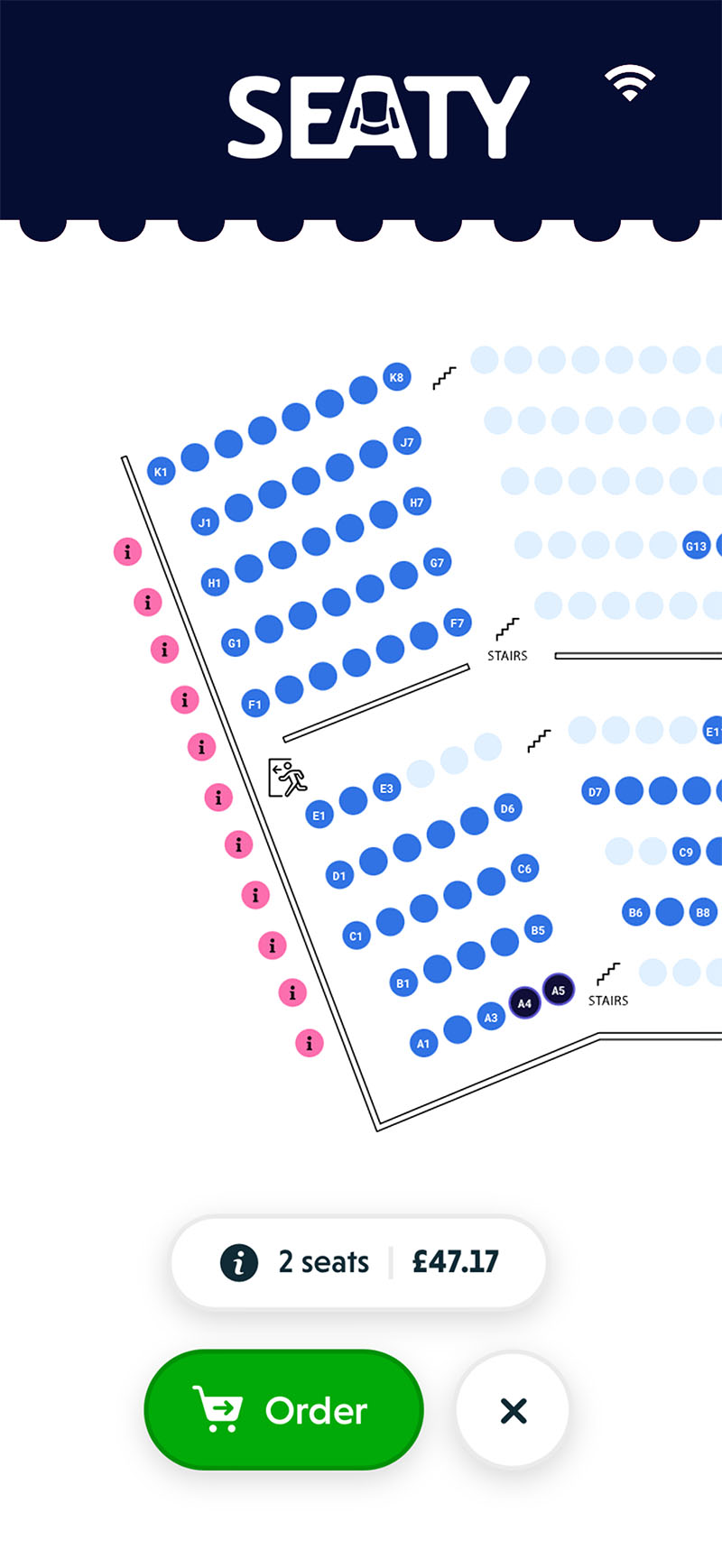
Reserved seating gives the buyer a specific seat, held only for them.
A picked seat on a plan, named on the ticket, scanned on the door. Buyers know exactly where they are sitting, families end up next to each other, and accessible spaces can be allocated explicitly long before the night.
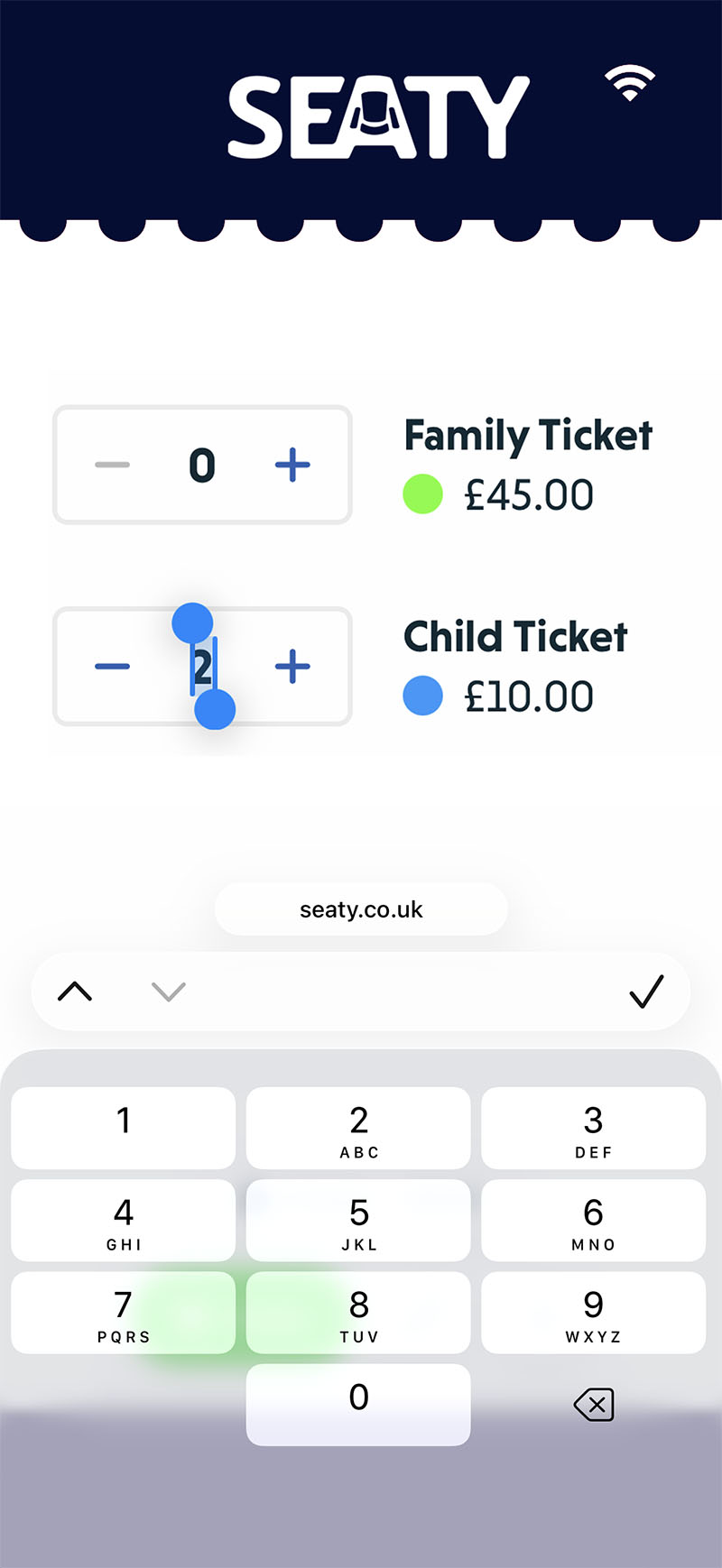
General admission grants entry. The rest is decided on the night.
One ticket, one entry. Faster to set up, lighter on per-seat admin, and the right call when the venue layout is fluid or the audience is on its feet.
Accessibility is non-negotiable in either model.
With reserved seating, allocate wheelchair spaces and companion seats on the seating plan before tickets go on sale. Make them obvious in the buyer flow, and never let them be sold to someone who does not need them.
With general admission, designate an accessible area at the front or side, allow priority entry before doors open to the general queue, and make sure companion tickets travel with the accessible ticket. A pure first-come, first-served door policy is not accessible. Disabled customers should never have to fight a queue to get a usable spot. Treat wheelchair spaces as designated from the outset, not an add-on retrofitted once the plan is built.
This is not just good practice. Under the Equality Act 2010 (Section 29 and Schedule 2), service providers (and a ticketed venue is a service provider) owe an anticipatory duty to make reasonable adjustments for disabled people, which includes removing physical barriers, providing auxiliary aids, and offering alternative ways to access the service when the standard method does not work for a disabled customer. Designating accessible spaces and a priority entry route in advance is precisely the kind of anticipatory adjustment the Act envisages.
Where this gets broken: common mistakes.
Running reserved without numbered seats physically marked. If the chairs in the venue are not labelled, the audience cannot find their seat and door staff cannot direct them. Either number them, or run GA.
Forgetting accessibility provision in GA setups. The most avoidable mistake on this list, and a real legal risk under the Equality Act 2010 reasonable adjustments duty. A pure first-come queue is not an accessible door policy. Designate spaces and priority entry before going on sale.
Not holding back press, comps and house seats with reserved. Reserved makes this easy: block out the seats before public sale and release them when ready. Forgetting until the night turns into "we are out of seats" for guests who were always meant to be coming.
Underestimating queue management for high-demand GA. If demand is going to overwhelm capacity, pure GA is the wrong call. Either cap hard and stop entry, or move to a hybrid with a reserved premium tier to take pressure off the door.
Treating wheelchair spaces as add-ons rather than designated positions. Accessibility decisions belong at the start of the seating plan, not at the end. Every accessible position should have a designated companion seat next to it from the outset.
Overselling general admission. Counting GA capacity loosely is how a venue ends up with people standing at the back who paid for a seat. Hard cap at venue capacity, and stop entry when the cap is hit.
A short checklist for choosing.
2. Will the audience expect to sit in a specific seat? Theatres, concert halls, classical and dance audiences almost always do. Gigs and festivals usually do not.
3. Are family groups buying together? Reserved makes this easy. GA needs them to arrive together and queue.
4. How is accessibility handled? Reserved lets spaces be allocated in advance. GA needs a designated area and priority entry. Plan it before going on sale, not after.
5. Where is the work going to land, pre-event admin, or door staff on the night? Reserved front-loads it; GA pushes it onto the door.
6. Could a hybrid serve better? Reserved premium plus GA general, or reserved seated plus GA standing, is a common UK answer.
Where this lands by venue type.
For dance recitals where families travel with grandparents and accessibility matters, reserved is the right default. See dance schools.
For independent theatres with a 120-seat house and a mixed-age audience, reserved is the cultural expectation and hybrid only really helps for unusual formats. See independent theatres.
For amateur dramatic societies in traditional venues, reserved is almost always right, because the audience skews older and family groups dominate. See amateur theatre.
Useful next reads
Sources & further reading
Accessibility
Equality Act 2010 (legislation.gov.uk)
Equality Act 2010, Section 29: Provision of services (legislation.gov.uk)
Equality Act 2010, Schedule 2: Reasonable adjustments duty for service providers (legislation.gov.uk)