Ticketing software for independent theatres.
Seaty was built around the same kind of work: organisations doing more with less, where the platform either helps or gets in the way. Reserved seating that mirrors your venue. Free when payments come through your own box office. The same tools across the whole season, not paid features bolted on as you grow.
Running a theatre is not running a one-off event.
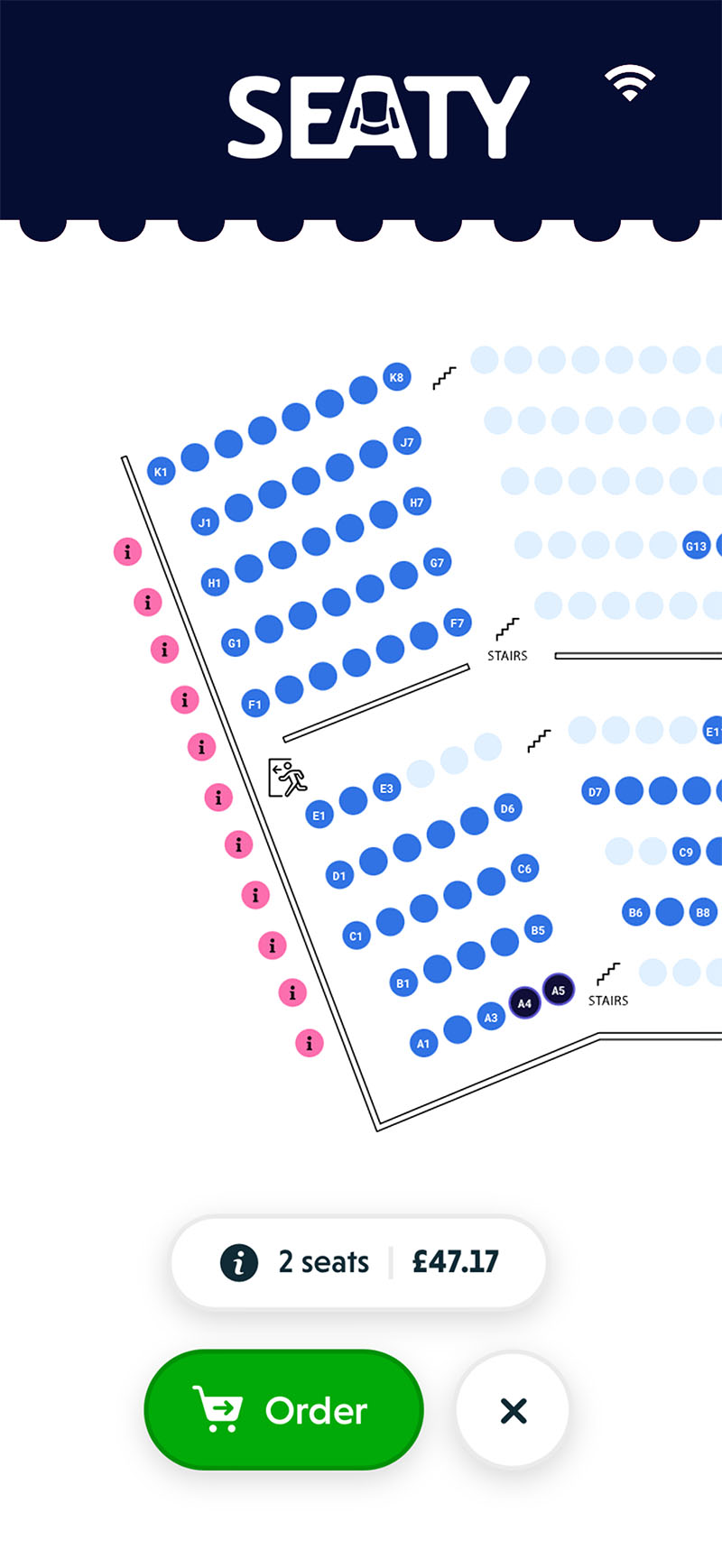
Box office tools for fringe venues and studio theatres.
Build your stalls, circle, and balcony as a single visual seating plan, or rebuild a flexible studio space when the rake or in-the-round configuration changes between shows. Restricted-view seats are marked clearly and priced down. Accessible spaces and companion seats are designated explicitly. Hold seats off-sale for press night, sponsors, and partner organisations. Box office staff can hold seats while a phone booking is in progress so the customer is not racing the clock to checkout.
- Visual editor for any venue layout, including unusual studio and in-the-round configurations
- Sections for stalls, circle, balcony, side, and standing where you have it
- Restricted-view, accessible, and companion seats marked clearly
- Hold-back seats for press, sponsors, complimentary tickets, and last-minute fixes
- Box office staff can hold seats during a phone booking
- Seats update live as others book, so the plan every customer sees is always current
Year-round programming, not single events.
Manage a season the way you actually programme it

Theatres do not announce events one at a time. They commit to a season, then sell across it. Seaty supports the season-level view: events grouped as tours when a show runs multiple dates, member subscriber schemes that span the year, mailshots targeted at recent attendees of a particular kind of show, and reporting that compares this season to the last. An independent theatre running a programme of own productions and visiting companies might publish a 30-show season in a single afternoon, then sell into it for nine months.
- Group repeated dates of the same show as a tour with shared marketing
- Subscriber schemes that span the whole season, not single events
- Mailshots targeted by past attendance, not just blanket lists
- Compare ticket sales across events and seasons
Show the auditorium before they book.
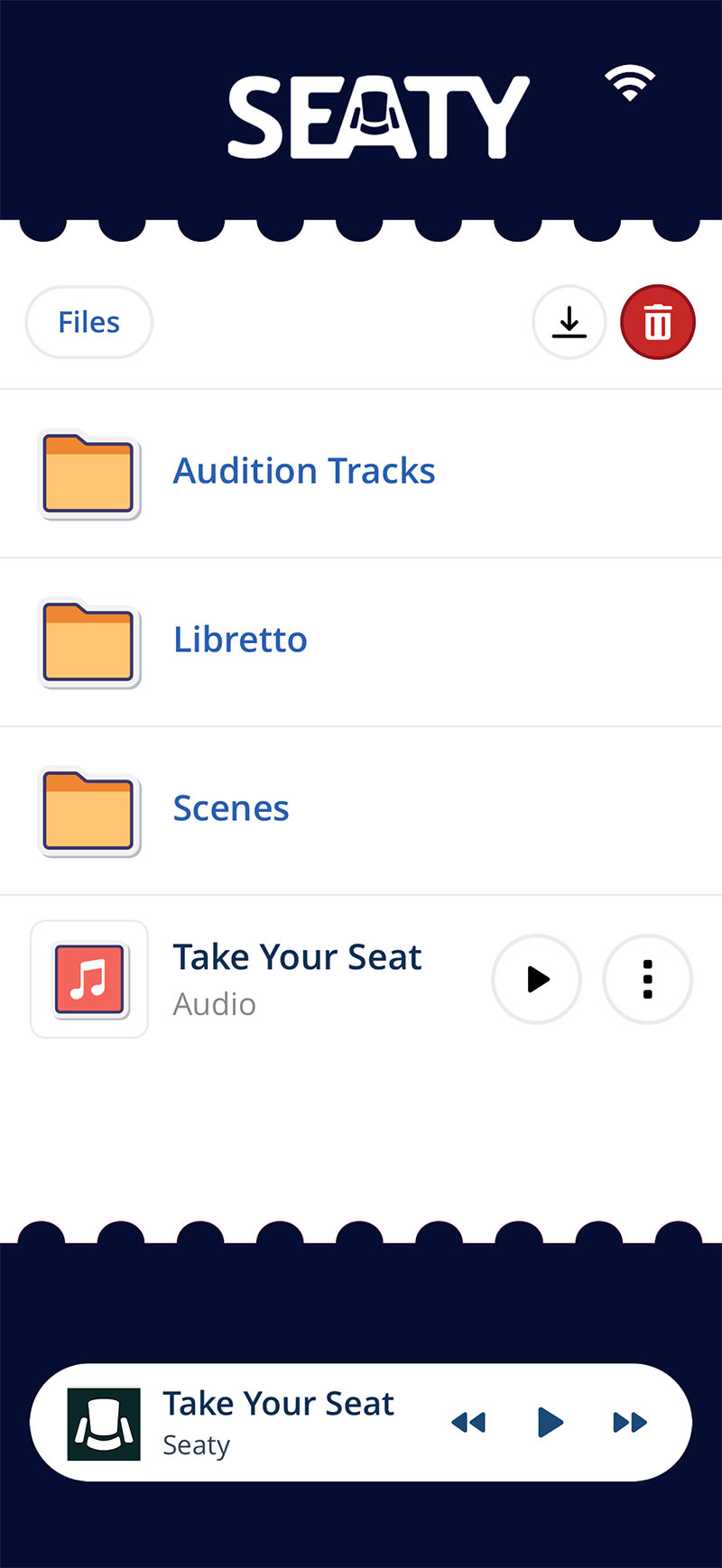
Touring company workflow.
A visiting company arrives Thursday for a load-in, plays Friday and Saturday, gets out Sunday morning. In the week before, they need to share riders, technical specs, marketing assets, and rehearsal recordings with venue staff so the get-in is not chaos. Seaty's file management handles all of that, with access scoped to the events the visiting company is involved in rather than the venue's full programme. No frantic Dropbox-link forwarding the night before tech, and no risk of the company seeing the rest of the venue's programme.
- Per-event file sharing for riders, tech specs, and marketing assets
- Visiting companies see only the events they are involved in
- Audio and video playback for rehearsal recordings and trailers
- Music notation viewer for visiting orchestras and musical theatre tours
- Files stay accessible after the run for archive and reporting
Hosting a visiting company in the next month?
Subscriber and friends-of-the-theatre booking.
Build the relationships that bring people back

An independent theatre's audience is the asset. Friends-of-the-theatre members get first refusal on a new season four weeks before public on-sale. Concession bookers get under-26 and OAP rates without needing to ask. Sponsors get their box every time. Seaty handles paid subscriber schemes, unpaid mailing lists, and event-targeted mailshots from the same dashboard. Targeting can be by past attendance, member type, or a specific event's buyers, so the new musical does not get marketed to the people who only ever come to the studio season. Subscribers actually feel the value of being a Friend of the Theatre rather than getting the same email two days later than everyone else.
Subscriber priority booking
Member-only discounts and priority booking windows that open before public on-sale
Friends-of-the-theatre tiers
Paid memberships with year-round benefits, renewals, and tier-based discounts
Targeted mailshots
Filter by past attendance, member type, or specific event buyers, not blanket sends
Concession pricing
Automatic under-26, OAP, student, and partner rates without manual code lookup
Opening subscriber priority booking on a new season?
Press, sponsor, and complimentary allocations.
Free or self-hosted ticket sales for small theatres.
For the broader picture on how UK ticketing platforms charge, see our guide on how UK ticketing fees actually work. If your venue is registered as a charity, the guide on selling tickets for charity events covers Gift Aid, donations on the order form, and how the free-when-self-hosted model interacts with restricted-fund accounting. For audience data and mailing-list compliance, the guide on GDPR for event organisers covers consent, retention, and the rules that subscriber communications need to follow.
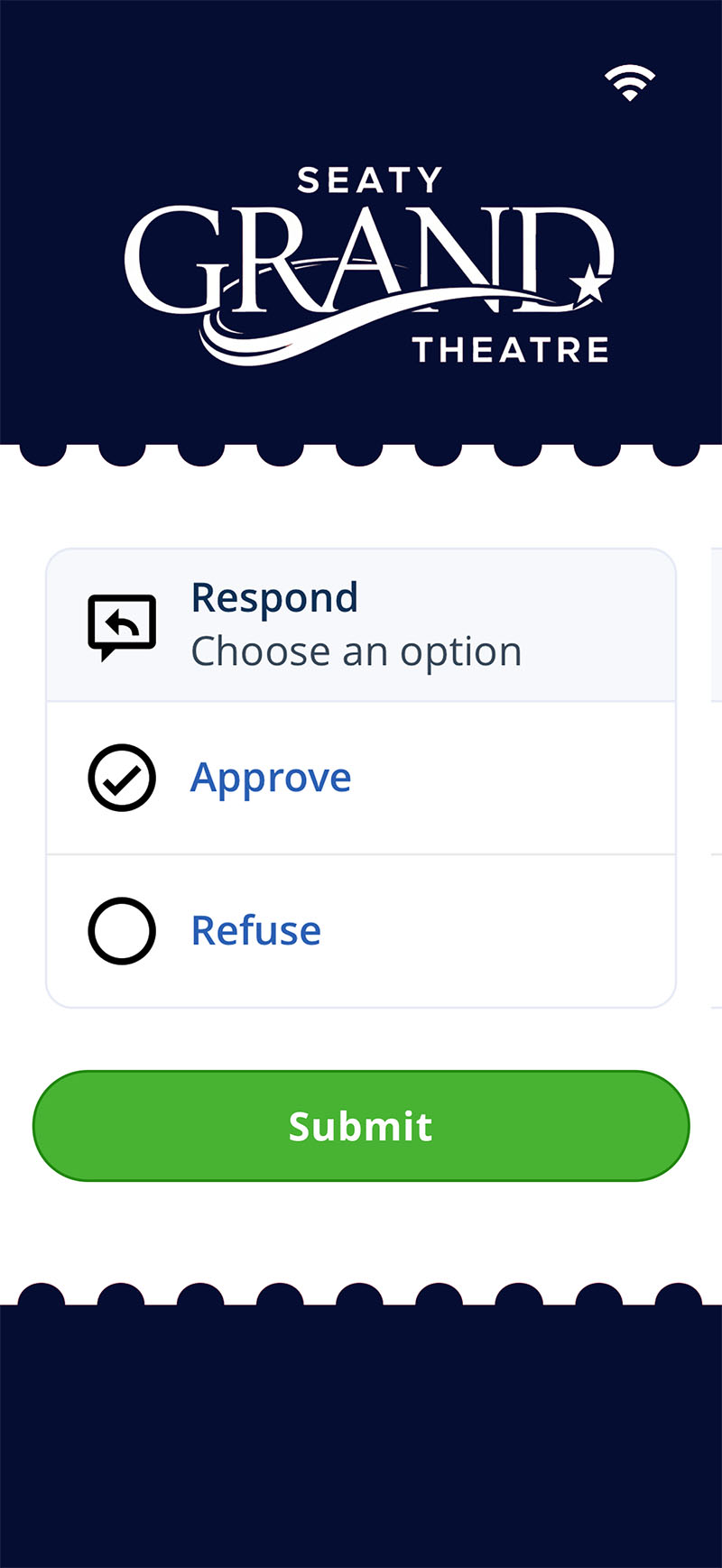
Box office tools designed for daily use.
Find an order in seconds, swap a ticket between dates when a customer's plans change, refund partial payments, record cash and cheque payments alongside card orders, transfer an order to a different person when a buyer reassigns the gift, and audit every change with a stamp of who did what when. The same daily workflow whether the booking came through phone, walk-up, group enquiry, gift voucher redemption, or online.
- Find orders by name, email, ticket reference, or seat
- Swap tickets between dates without cancel-and-rebook
- Record manual payments (cash, cheque, invoice, card-reader) on the order
- Transfer order ownership when a buyer reassigns the gift
- Group booking enquiries and quotes alongside individual bookings
- Full audit log on every order change
What independent theatres actually need from a box office.
Generic commercial ticketing platforms (the ones built for one-off concerts and festivals) break down the moment you try to programme a season. The same software that sells a sold-out arena gig cannot handle a 12-show studio season with a friends-of-the-theatre tier and a touring company every fourth week. They charge per-ticket fees that destroy small-venue margins, treat each show as a standalone listing, and have no concept of subscribers, visiting-company file sharing, or held press allocations. If you are publishing a 30-show season in one afternoon, generic platforms make you re-set up subscriber discounts and comp holds on every event.
Enterprise venue platforms (the ones built for 1,000-seat receiving houses) want £400 a month before they let you take a single ticket, and want a contracted training package on top. Most independent theatres cannot justify that on a 120-seat house with a programmer-and-a-half running the building. The CRM modules and contracted onboarding are aimed at organisations turning over seven figures a year, not a community studio running a 40-week season on grant funding and bar takings.
Building payments on Stripe Checkout alone does not solve it either. Stripe takes the payment. It does not know the critic needs the aisle seat in row C, that the visiting company's tech rider is shared only with their staff, or that subscriber priority opens four weeks before public sale. It cannot hold a seat while a phone booking is in progress, refund a single ticket out of a six-seat order, redeem a gift voucher against a future date, or log who released the press hold. Stripe is the payment primitive; the box office is the rest of the work.
Seaty was built for the gap. Reserved seating with a proper visual editor. Subscriber and friends-of-the-theatre tools that exist by default, not as a paid upgrade. Visiting-company file sharing scoped to the events they are in. A box office that handles phone, walk-up, and online on the same availability. Free if you take payments through your own card reader, a single per-transaction fee if you take cards online. That is the whole pricing page.
Arts Council reporting and audience data.
Gift Aid, audit logs, and the long view

Many UK independent theatres are registered charities or community-interest companies, and report year-on-year audience numbers, accessibility seat usage, and concession breakdowns to funders including Arts Council England. Seaty handles Gift Aid declarations on eligible donations, keeps audit logs for trustee and funder reporting, and supports the kind of long-term record-keeping (past seasons, member history, financial breakdowns) that grant applications and funder reports actually need. Arts Council reporting ready year-round, not invented in March. Excel exports cover the rest.
Gift Aid
Mark eligible donations for Gift Aid automatically, with claim records kept alongside orders
Audit logs for trustees
Every order change recorded for trustee, committee, and funder reporting
Multi-season history
Past programmes, audiences, and finances stay accessible for grant applications
Accessibility breakdown
Wheelchair, companion, and access-scheme bookings tagged for funder returns
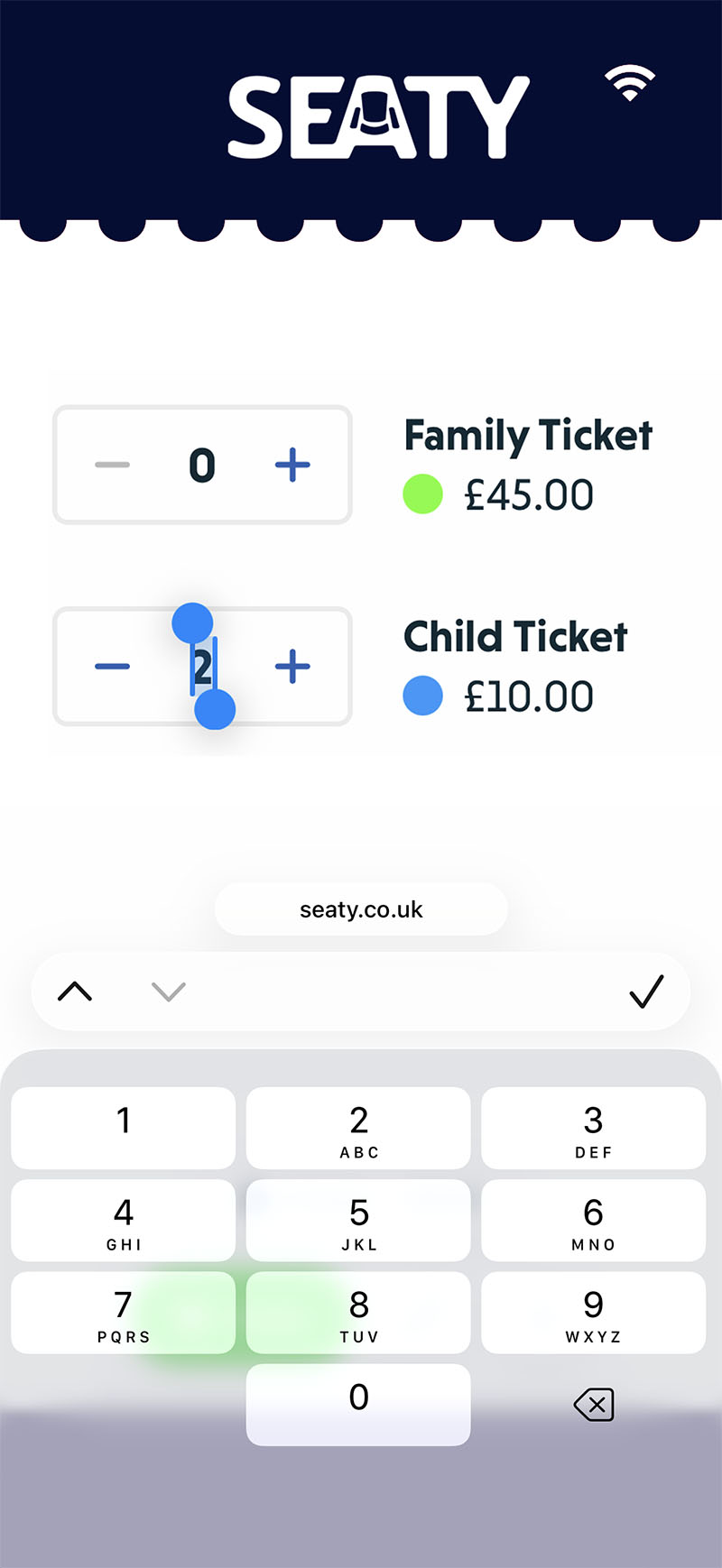
Programmes, ice creams, and interval drinks.
A theatre's secondary spend is not an afterthought. Programmes at three pounds, ice creams at two, pre-ordered interval drinks for the regulars who do not want to queue. Seaty sells merchandise the same way it sells tickets: scannable vouchers exchanged at the front of house, real-time stock so you do not run out of programmes mid-run, and a single sales report at the end of the night covering tickets, merchandise, and donations together.
- Programmes, ice creams, and interval drinks sold alongside tickets
- Pre-ordered drinks claimed at the bar with a scannable voucher
- Real-time stock so the box office can flag a sold-out programme run
- Single end-of-night sales report covering everything