A quarter of your admission income, left on the table.
HMRC has a specific scheme that lets charities claim Gift Aid on the price of admission to view their property, and most general ticketing platforms cannot do it. So heritage charities either lose the 25%, or move to a full visitor-attraction system built for turnstiles, hardware, and year-round memberships, which is far more than a venue running events and seasonal openings actually needs.
Seaty sits in between. It runs your events and admissions on a simple platform with no contract, and it builds HMRC's 10% admission Gift Aid route directly into checkout. Used by UK charities and heritage venues that charge for admission and run their own events.
Ticketing for charity attractions and heritage venues.
This page is for charity-run historic houses, gardens, museums, and similar venues whose income is events and occasional or seasonal admission. If you also fundraise through a parish, see notes for churches, and if you host visiting music groups, see choirs and orchestras.
Why charity attractions need more than a generic ticketing platform.
Generic ticketing platforms take the card payment and stop there. They have no concept of admission Gift Aid, so the 25% your charity is entitled to reclaim on admission income simply never gets captured. On twenty thousand pounds of admissions, that is up to five thousand pounds of HMRC money walking past the gate every season, because the booking form had no box for it.
The alternative most heritage charities are pushed toward is a full visitor-attraction system: EPOS tills, turnstiles, membership engines, hardware, setup fees, and an annual contract. If you run a turnstile attraction with year-round annual memberships, those systems earn their keep. If your income is open days, events, and seasonal admission, you are buying an enterprise system to solve a problem that a good events platform solves at a fraction of the cost.
Seaty captures admission Gift Aid through HMRC's 10% route, charges no per-ticket fee on free events, requires no attendee accounts, and has no contract or setup fee. The mechanics of the scheme are laid out in full in our guide to Gift Aid on admission to charity property, and the general charity rules in selling tickets for charity events.
Admission Gift Aid, built into checkout.
Reclaim 25% of admission, not just a separate donation

HMRC lets charities treat the price of admission as a Gift Aid donation when a visitor pays at least 10% more than the normal admission fee. Seaty builds this 10% route into booking: mark which admission tickets are eligible, set the uplift percentage (at least 10%), and visitors see a 'with donation' admission alongside the standard price. A UK taxpayer who chooses it, and completes a Gift Aid declaration, turns the whole payment into a claimable donation. The standard price is always shown too, exactly as HMRC requires, so the uplift stays genuinely voluntary. It works online, at the box office, and through ticket requests, and the claim figure lands in your reporting. Seaty covers the 10% route for events and admissions, not the separate 12-month annual-membership route.
- Mark admission tickets as Gift Aid eligible per event
- Set the uplift at 10% or more, the HMRC minimum for the scheme
- Visitors choose standard admission or "with donation" at the higher price
- The whole with-donation payment is treated as the Gift Aid donation
- Declaration captured at booking and kept for your claims
- Works online, at the box office, and through ticket requests
Stop leaving admission Gift Aid unclaimed.
Open days, seasonal admission, and timed entry.
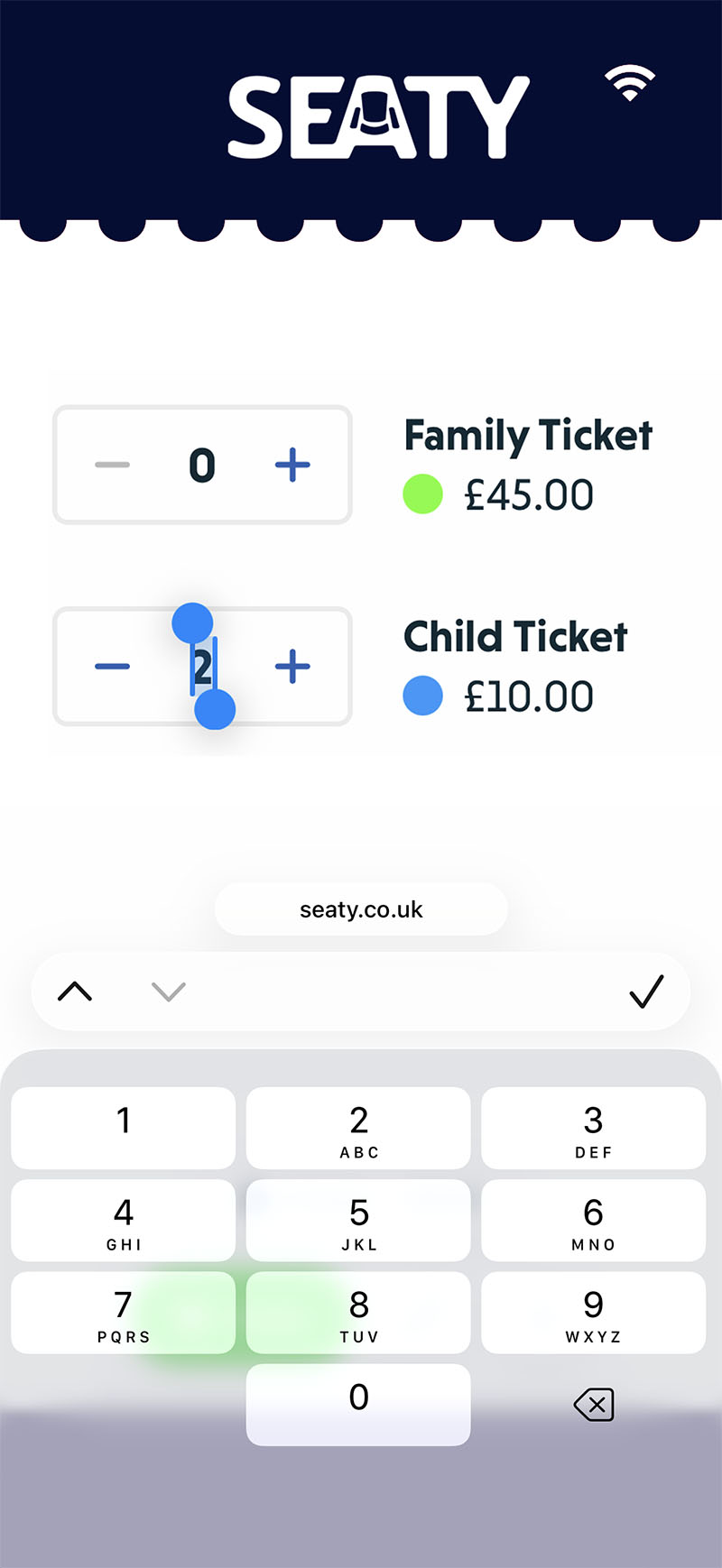
A historic house opening its gardens for the summer, or a museum running themed weekends, needs to manage capacity and sell admission without a full EPOS install. Set the admission price, add the with-donation option for Gift Aid, cap numbers per day or per time slot, and open bookings. Visitors book without an account; the team has an accurate arrivals list before the gates open. Cash at the gate still works alongside online sales, and stays free to take.
- Standard and with-donation admission shown side by side
- Per-day or per-time-slot capacity for timed entry
- Free tickets for community open days carry no per-ticket fee
- Cash, cheque and bank transfer stay free to take at the gate
- Concessions, family rates and group rates supported
- Visitors book with just an email address, no account needed
Galas, concerts, and outdoor theatre in the grounds.
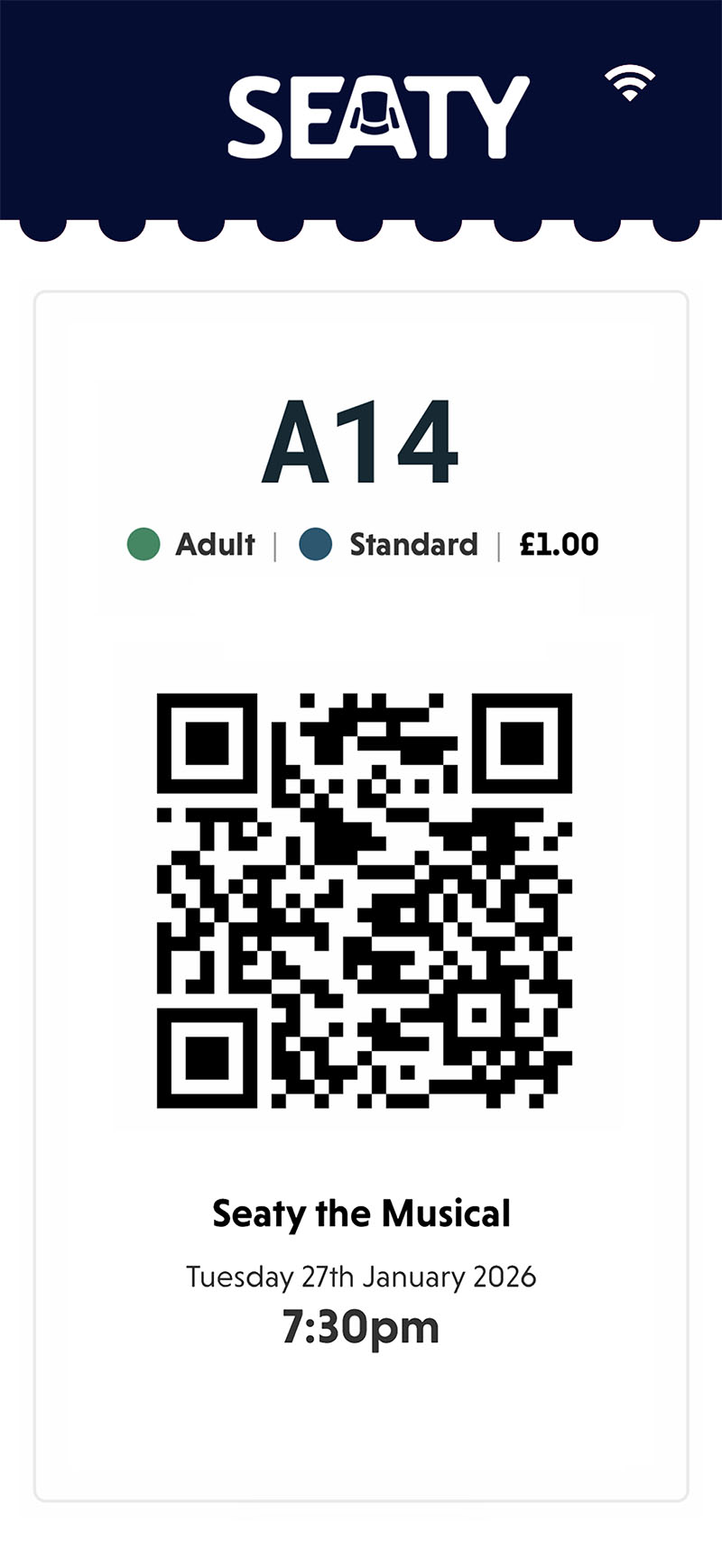
The events that fund the year (a Christmas gala in the house, an open-air Shakespeare evening on the lawn, a candlelit concert, a fireworks night) are where a heritage venue makes its margin. Seaty runs these as a proper box office: set prices and capacity, add the with-donation option where the admission qualifies, choose whether to absorb the card fee or add it at checkout, and open bookings. Reserved seating is there when an event needs it; general admission when it does not.
- Box office for galas, concerts, outdoor theatre and seasonal events
- Reserved seating or general admission, per event
- With-donation admission on eligible events for Gift Aid
- Absorb the card fee in the price or add it at checkout
- One organisation page that carries your venue branding across every event
Accessibility, captured before the visit.
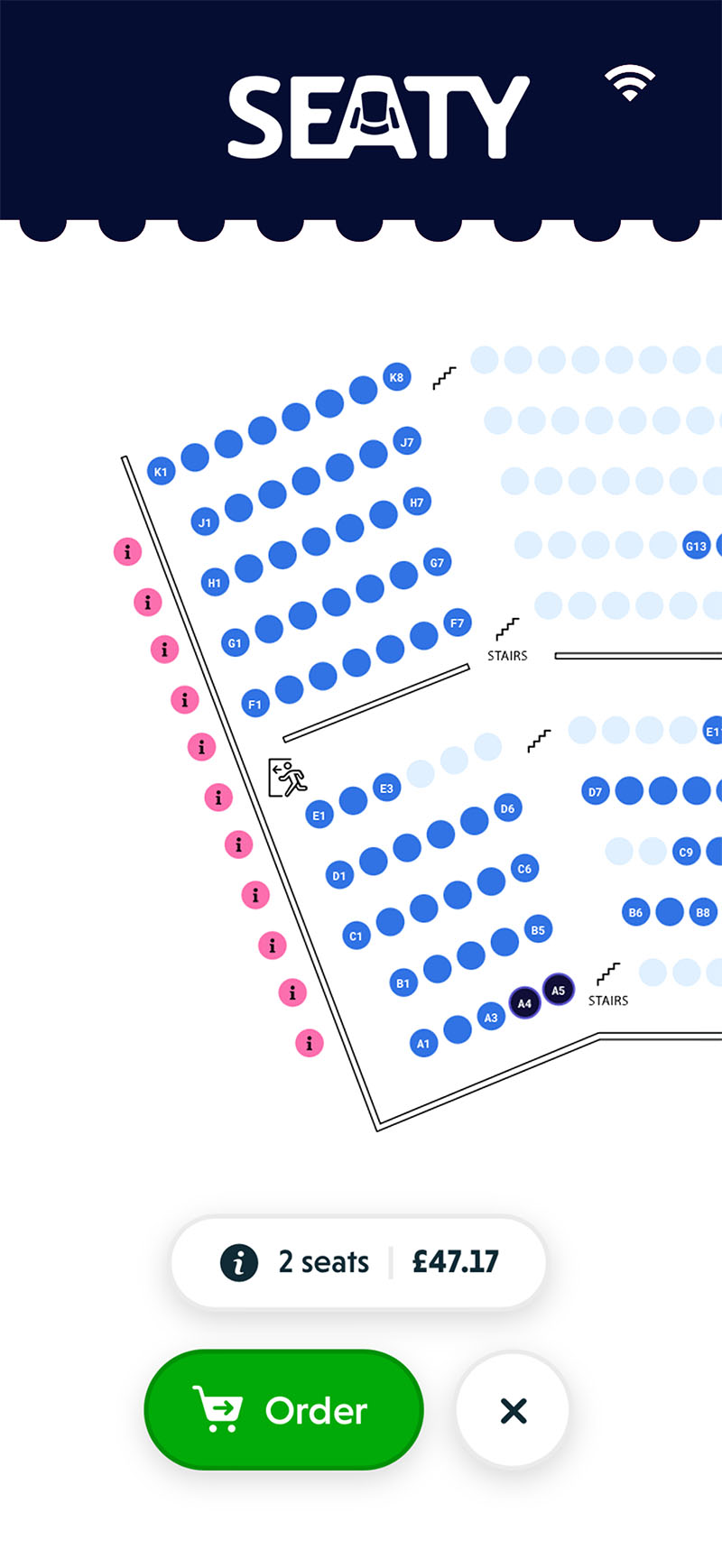
Heritage venues attract older audiences and have real access constraints: gravel paths, steps into the house, limited step-free routes. Mark accessible spaces and companion seats on a seating plan, or capture step-free access, wheelchair, and hearing-loop needs as a custom question on general admission. The requirements arrive with the booking, so the team can plan the route and the parking before the visitor arrives, rather than improvising at the door.
- Wheelchair and companion spaces on the seating plan
- Capture step-free access and mobility needs as a custom question
- Requirements arrive with the booking, not on the day
- Front-of-house notes visible to the welcome team
- Dietary needs captured for dinners and galas
Open your next season of admissions and events.
Scanning at the gate, even where the signal gives up.
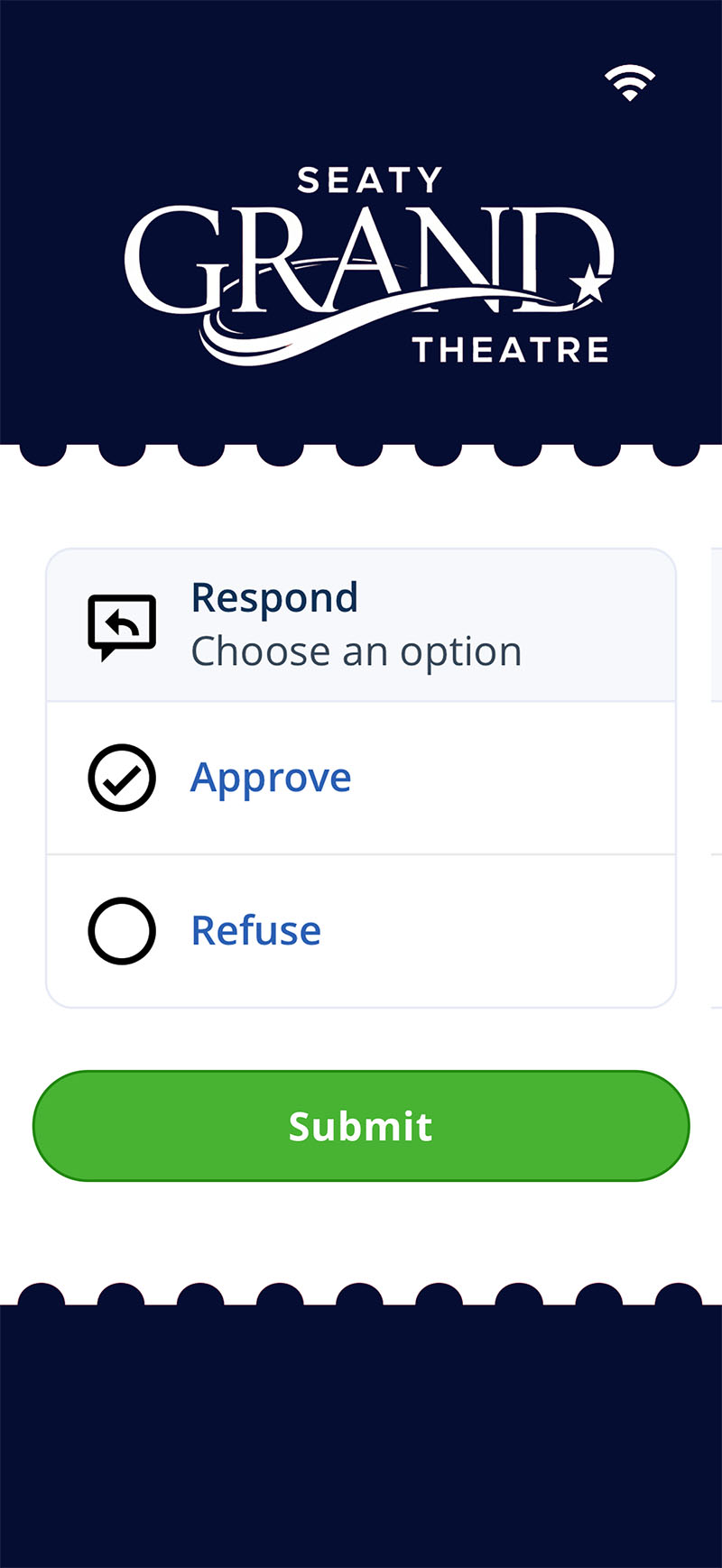
On the day, a volunteer with a phone scans tickets at the gate, or ticks names off a printed list. The scanner runs offline, which matters in stone houses with thick walls and on rural estates where the mobile network gives up at the gatehouse. Multiple staff can scan at once across different entrances, and live attendance counts are visible to whoever is running the day.
- Free Seaty app on iOS and Android for scanning
- Works offline, no signal required at the gate
- Multiple staff scanning at once across entrances
- Or print a paper arrivals list and tick people in by hand
- Live attendance counts for whoever runs the day
Records that stand up at the AGM.
Gift Aid claims, audit trails, and treasurer exports

A charity attraction's accounts get scrutiny, and admission Gift Aid claims have to be evidenced for six years. Seaty keeps a record of every order, every refund, every Gift Aid declaration, and every change made by every administrator, alongside exports a treasurer can hand to the auditor. The Gift Aid figure for each claim is produced in reporting, separating admission, the donation portion, and any voluntary giving, so the claim is built from records rather than reconstructed from memory.
Admission Gift Aid records
Declarations captured at booking, with the claimable figure produced per event in reporting, then export claims in HMRC Gift Aid schedule format and mark them as claimed to HMRC from the Gift Aid claims page, with an audit trail of what has been claimed
Audit logs
Every change to every order recorded, with a name and a timestamp
Treasurer exports
Spreadsheets shaped for charity accounts and Gift Aid claim preparation